How ChatGPT ads actually work in 2026
 Tarun Kapoor
Updated 4 September 2026
16 min read
Tarun Kapoor
Updated 4 September 2026
16 min read
ChatGPT ads are sponsored placements that appear below a ChatGPT response on the Free and Go plans in the United States, Canada, Australia, New Zealand, the United Kingdom, and Japan. Each ad carries the advertiser name, favicon, title, copy, image, and a landing-page link, and is selected by a relevance-weighted second-price auction that scores your context hints, landing page, ad title, and ad copy together. This guide walks through every moving part — eligibility, the unit, the auction, what it really costs, measurement, the readiness call, and how the channel compares to Google, Meta, and Bing — in plain English, written by an operator who has bought media for twelve years.
The short version
- Where: below the answer, labeled sponsored, never inside the answer.
- Who sees it: Free and Go users in the US, Canada, Australia, New Zealand, the UK, and Japan. Not Plus, Pro, Business, or under-18.
- How you target: context hints that describe the conversation — not exact-match keywords.
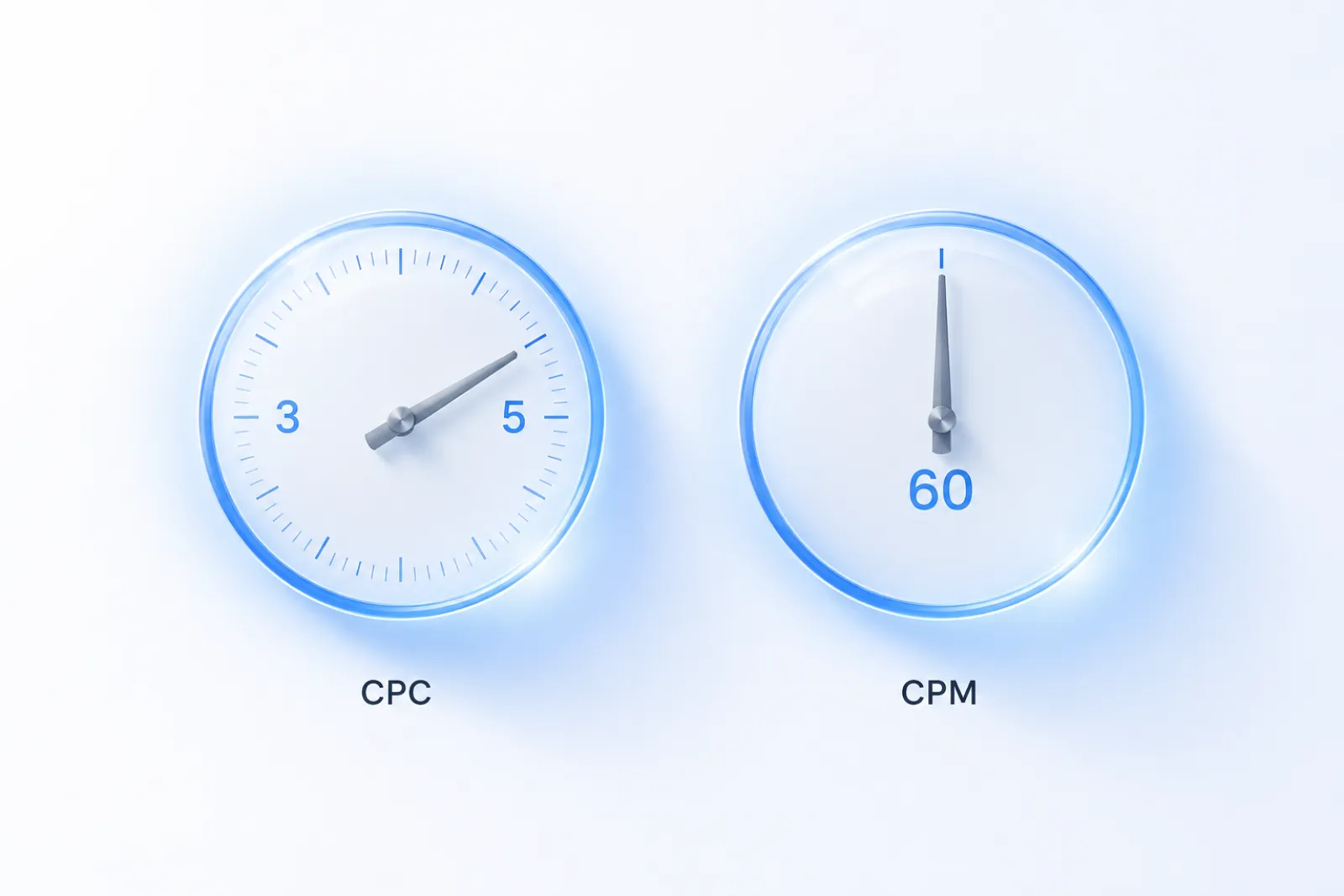
- What it costs: you set the budget. OpenAI suggests a 3 to 5 dollar starting CPC max bid, or a 60 dollar default CPM. Second-price, so you usually pay less than your max.
- How to win: relevance, not just bid. A sharper relevance score outranks a bigger budget.
Who sees ChatGPT ads, and where
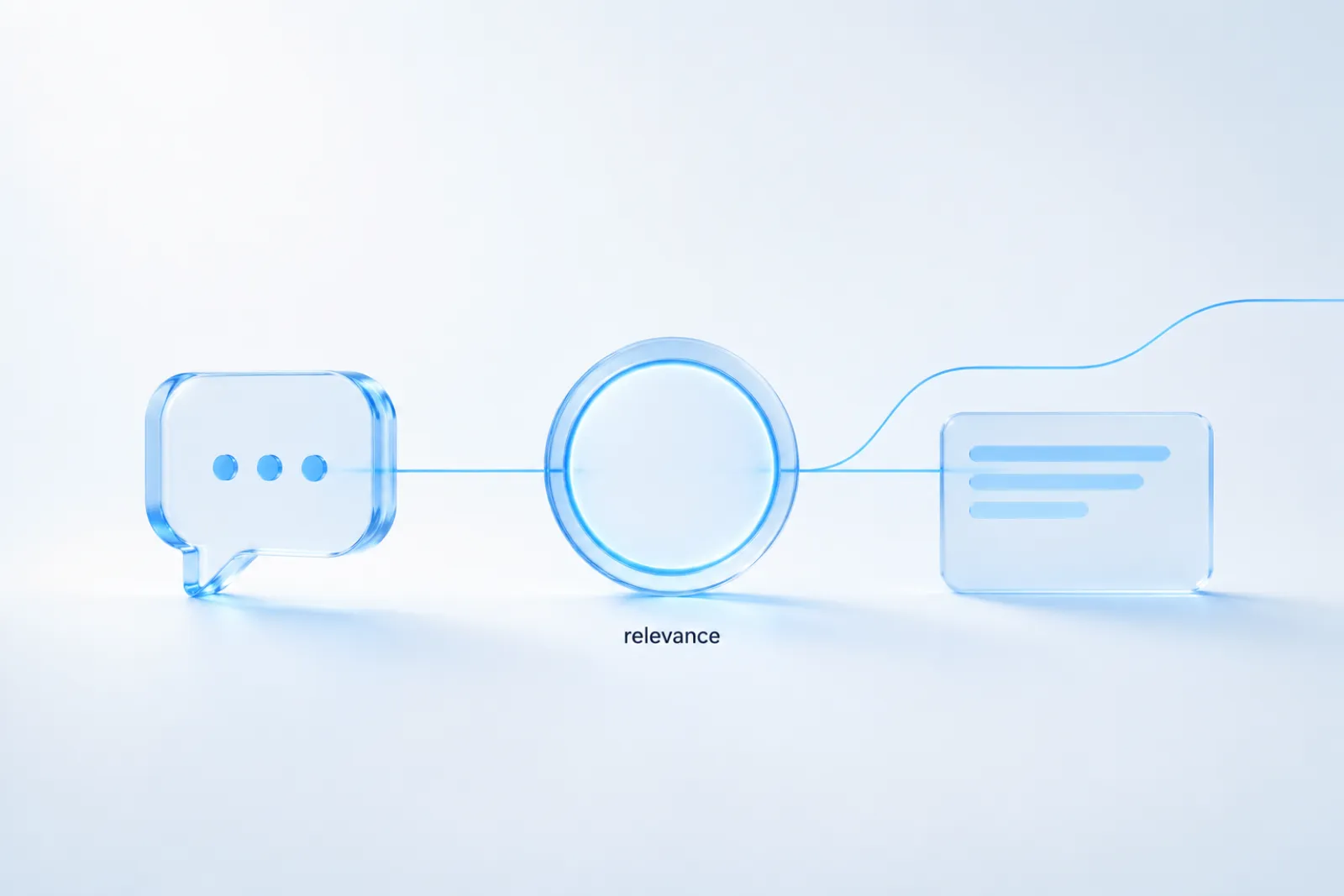
OpenAI is deliberately conservative about who is exposed to ads. Today the answer is narrow.
| Audience | Ads shown? |
|---|---|
| Free plan in US, CA, AU, NZ | Yes |
| Go plan in US, CA, AU, NZ | Yes |
| Plus, Pro, any Business plan | No |
| Users declared or predicted under 18 | No |
| All other geographies | Not yet (the UK is announced as next) |
That is a deliberately small surface, and it is the cleanest part of the plan. Paid power users get an ad-free experience. Anyone who might be a minor sees no ads at all. Ads only run in markets where OpenAI is confident about the policy regime. The practical implication for advertisers: your addressable audience is the Free and Go tier in four English-speaking countries — still very large, but worth calibrating expectations against, especially when you are reading week-one volume.
The ad unit, piece by piece
An ad unit in ChatGPT contains six visible elements:
- Advertiser name — your verified business name.
- Favicon — a small advertiser logo.
- Title — the headline. Treat it as your hook.
- Copy — the description line. Treat it as your value claim plus a single proof point.
- Image asset — the creative.
- Landing page — the URL the user is sent to.
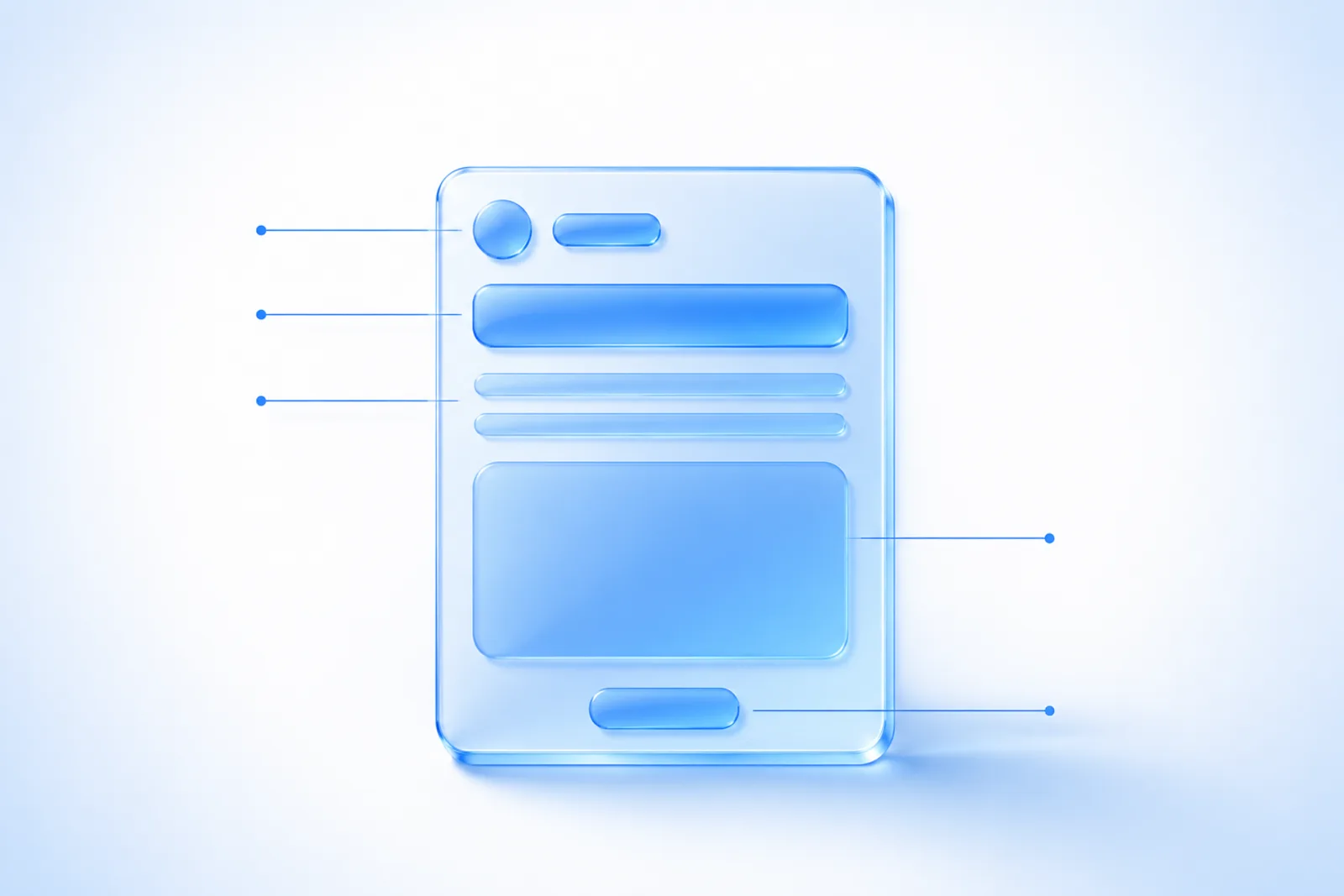
The unit appears below the conversational response, not inside it. OpenAI is explicit on this point: ads remain distinct from ChatGPT's answers. The model is not endorsing your product — it is answering the user's question, and beneath that answer sits your sponsored placement.
Operator implication
Your ad has to make sense as a standalone unit. The model's answer above your ad will sometimes recommend a competitor by name. Write copy that earns the click despite that — by naming a sharper angle, a specific objection your offer resolves, or a proof point the model cannot surface on its own.
From prompt to placement — the journey of a single ad
- A user types a prompt in ChatGPT.
- The model formulates an answer.
- The ad system parses the conversation in parallel.
- Eligible ad groups are identified — those whose context hints describe this conversation.
- The auction ranks eligible advertisers by bid multiplied by relevance.
- The winner is selected. The unit renders below the model's response. The advertiser pays one increment above the second-place effective bid.
- If the user clicks, UTM parameters persist into the landing page, and the click and any downstream conversion are reported to the advertiser.
Two things to internalize. First, the user does not see ads on every prompt — only when an eligible advertiser exists and the conversation crosses a relevance threshold. Second, your relevance score is computed across four inputs: context hints, landing page, ad title, and ad copy. All four matter. A weak landing page can torpedo great hints; weak hints can torpedo great copy.
The auction in 90 seconds
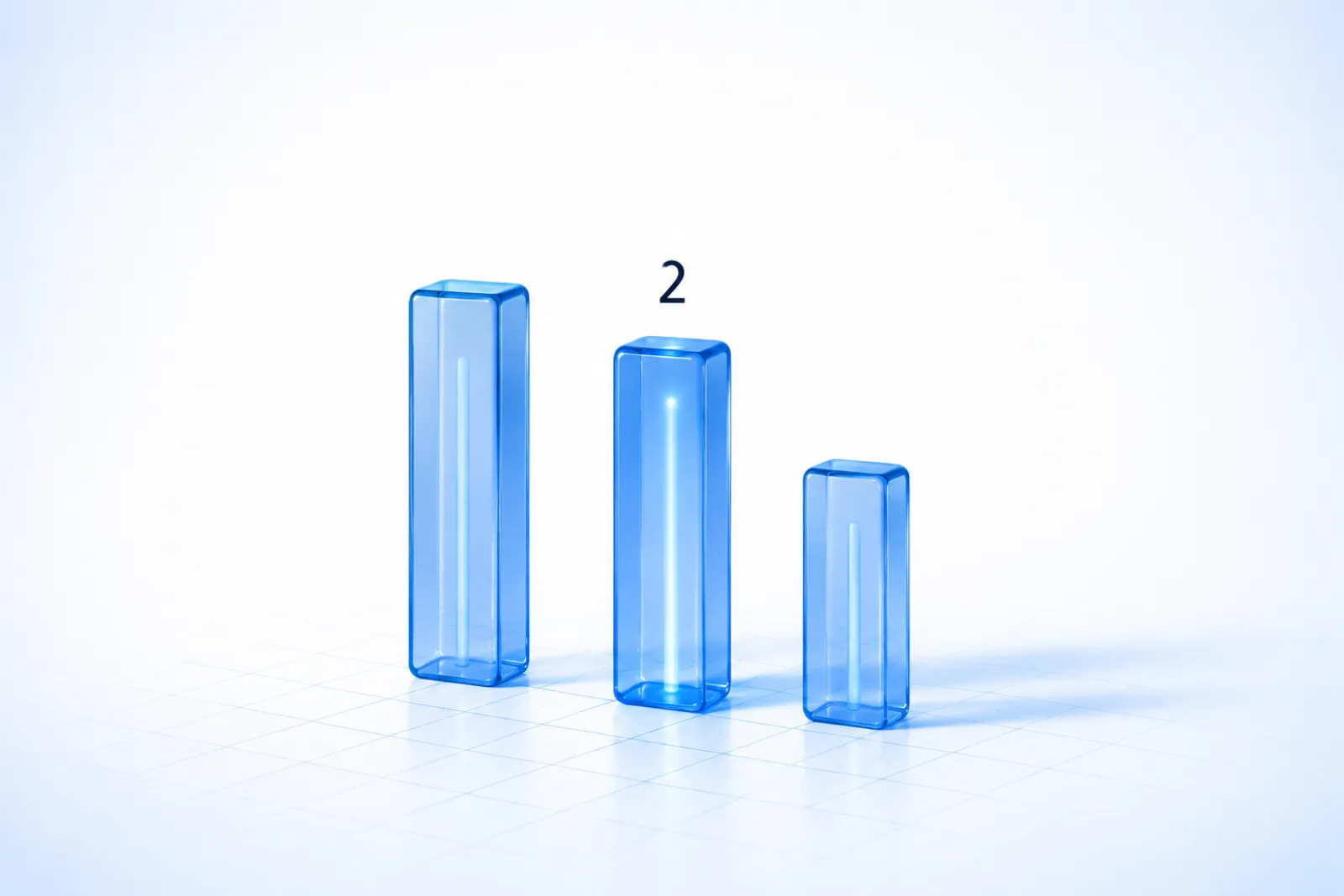
OpenAI describes the auction as relevance-weighted and second-price. The strategic implications:
- Bid your true value. Second-price auctions reward truthful bidding. Your max bid is what you would pay if you had to — but you usually pay less.
- Relevance is leverage. A higher relevance score lets you outrank advertisers with bigger bids. This is the single biggest reason to invest in hint quality, landing-page alignment, and copy coherence.
- It is not a share-of-voice game. Spending more does not guarantee more impressions if your relevance is poor. The auction is designed to maximize the platform's user value and your expected value at the same time.
Pricing and bid models
| Buying option | Campaign objective | Starting bid |
|---|---|---|
| CPC — cost per click | Clicks | OpenAI recommends a 3 to 5 USD maximum bid to start |
| CPM — cost per 1,000 impressions | Reach | Default maximum CPM bid is 60 USD |
Use CPC when you have a measurable conversion and want to pay per outcome. Use CPM when you are building familiarity ahead of a future evaluation. The two models can coexist for the same product, in different campaigns.
The real cost picture, with the arithmetic
Most write-ups stop at the bid table. Here is what actually leaves your account, and the math you should run before you fund a campaign. The numbers below are illustrative — they show how the levers interact, not a guarantee of your results. Your real CPC, click-to-lead rate, and close rate are yours to measure.
Start with the two official anchors: a 3 to 5 dollar starting CPC for the Clicks objective, and a 60 dollar default CPM for the Reach objective. Because the auction is second-price, your effective CPC usually lands below your max bid when your relevance is strong.
| Scenario (illustrative) | Math | Outcome |
|---|---|---|
| Clicks objective, 1,000 USD budget, 4 USD effective CPC | 1,000 ÷ 4 | ~250 clicks |
| Those clicks at a 5% landing-page lead rate | 250 × 0.05 | ~12–13 leads |
| Effective cost per lead | 1,000 ÷ 12.5 | ~80 USD per lead |
| Reach objective, 1,000 USD budget, 60 USD CPM | 1,000 ÷ 60 × 1,000 | ~16,700 impressions |
The lever that moves cost-per-lead the most is not the bid — it is the landing-page conversion rate. Double the lead rate from 5% to 10% and your cost per lead halves without touching the auction. That is why relevance and landing-page alignment, not bid inflation, are where disciplined operators spend their attention. You can model your own numbers with our ChatGPT Ads Reach Calculator.

The costs the bid table hides
A media budget is rarely the whole bill. Budget for these before you launch, or they will quietly become your real cost per acquisition:
- Landing pages. ChatGPT clicks arrive mid-evaluation, not cold. A page that answers the specific question the buyer just asked converts far better than a generic homepage. If you do not have one, building it is part of the cost.
- Conversion tracking. UTM structure, GA4 or your analytics events, and a CRM mapping. Without this you are bidding blind and cannot optimize on outcomes.
- Creative. The image asset, and enough title and copy variations to let the auction find a winner.
- Management time. Someone has to write the hints, read the data weekly, and iterate. Whether that is your hours or an agency retainer, it is real.
Know your ceiling before you bid
The one number every advertiser should compute first is the maximum allowable cost per acquisition — what a customer is worth to you. A simple version: average order value times gross margin times your sales close rate gives the most you can pay for a lead and still profit. If a lead is worth 120 dollars to you and the illustrative scenario above produced leads at 80 dollars, the channel clears. If a lead is worth 40 dollars, it does not — and no amount of bidding fixes that. Decide this before you fund anything.
For the full pricing picture — the 2026 CPC and CPM changes, budget scenarios by business size, and max-bid strategy — see how much ChatGPT ads cost.
What you can measure today
Ads Manager Beta reports the standard performance metrics:
- Impressions, clicks, spend
- Click-through rate (CTR)
- Average CPC, average CPM
- Conversions, once you have set up conversion measurement
Two things are worth knowing:
- UTMs persist. Static tracking parameters on your landing-page URL flow through to your downstream analytics — GA4, Mixpanel, Amplitude, whatever you use — so you can attribute ChatGPT traffic like any other paid channel without waiting for first-party pixel parity. Use one consistent
utm_source(for examplechatgpt) and autm_campaignper ad group so the conversation theme survives into your warehouse. Our UTM Generator enforces a clean naming convention. - Exports are CSV. The dashboard supports table and chart views plus CSV exports for finance, BI, or warehouse imports.
Is this channel right for you, honestly
ChatGPT Ads rewards a specific kind of advertiser. Use this as a quick self-check before you spend.
| Factor | Proceed now | Fix first, or wait |
|---|---|---|
| How your buyers research | They ask long, evaluative questions a model would answer | Purely impulse or visual-first purchases |
| Landing page | You can point clicks at a page that answers the buyer's question | Only a generic homepage exists |
| Conversion tracking | UTMs and conversion events are in place | No analytics or event tracking yet |
| Budget tolerance | You can fund a 4 to 6 week learning test without panic | You need positive ROI in week one |
| Copy capability | You or someone on the team can write context hints and ad copy | You think targeting is a list of keywords |
How ChatGPT Ads compares to Google, Meta, and Bing
ChatGPT Ads is not a drop-in replacement for any existing channel. It is a new intent surface with its own targeting basis.
| Channel | Targeting basis | Maturity | Buying models | Best for |
|---|---|---|---|---|
| ChatGPT Ads | Conversation context (context hints) | Beta, early-mover window | CPC, CPM | Considered, research-led purchases |
| Google Search | Exact and broad keywords | Mature, high competition | CPC, smart bidding | Capturing existing demand |
| Meta | Interests, behaviors, lookalikes | Mature | CPM, CPC, oCPM | Demand generation, visual products |
| Microsoft (Bing) | Keywords | Mature, lower competition | CPC | Older or B2B desktop audiences |
The strategic read: ChatGPT Ads behaves most like paid search, but the unit of targeting is a paragraph the buyer wrote rather than a keyword they typed. The early-mover advantage is real — low advertiser density today means relevance is cheaper to win — but it is a test budget alongside your proven channels, not a replacement for them. For the full head-to-head, see ChatGPT ads vs Google Ads.
Five mistakes that quietly waste budget
- Treating context hints like a keyword list. Hints describe a conversation in natural language. A pile of strings under-describes intent and tanks relevance. Read how to write context hints that convert.
- Sending clicks to a generic homepage. The buyer just asked a specific question. Land them on a page that answers it, or you pay for clicks that bounce.
- Bidding before conversion tracking exists. Without conversion data you cannot tell good spend from bad, and the auction's relevance loop has nothing to optimize toward.
- Writing copy that assumes the model endorses you. The answer above your ad may recommend a competitor. Your copy has to win the click on its own merits.
- Judging the channel in week one. The surface is small and delivery is lumpy. Give it a 4 to 6 week learning window and read relevance and conversion trends, not single-day impressions.
Brand safety and the three trust principles
OpenAI publishes three principles that govern the ads experience:
- Clearly labeled. Every ad is visibly identified as sponsored.
- Separate from answers. Ads do not appear inside the model's response text.
- Choice and control. Users control how their data is used for ads.
In practice, OpenAI also restricts ad placements near sensitive contexts. The intent is that an ad never appears next to a chat where the placement would be inappropriate — medical, legal, emotionally fraught, or otherwise outside the platform's safety perimeter. Specific category exclusions are governed by OpenAI's Ads Policies, which are the authoritative source and worth checking before any vertical-specific campaign.
The mental model that helps most operators
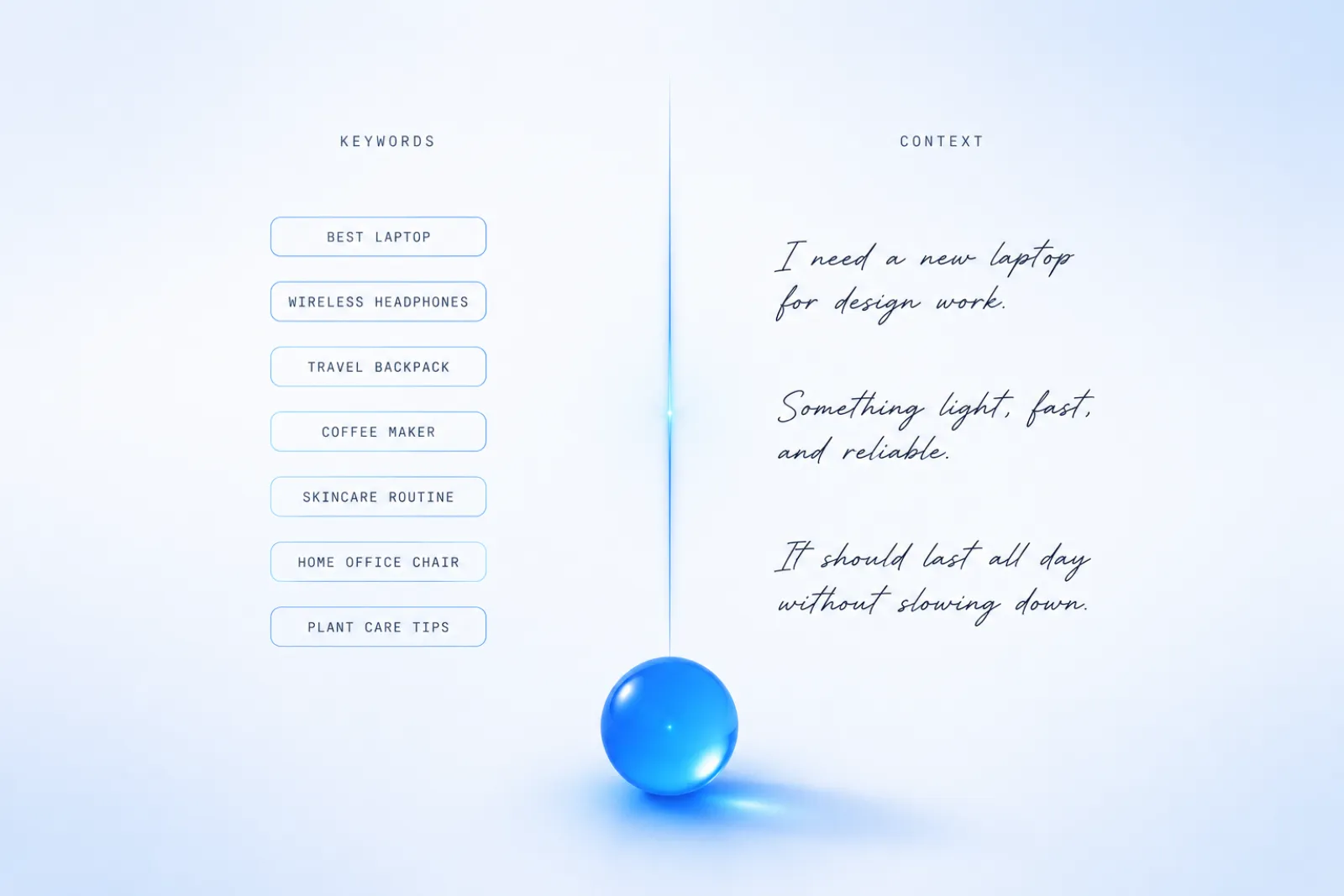
For paid-search marketers crossing over to ChatGPT, the cleanest mental model is this:
"ChatGPT Ads is search, but the keyword is now a paragraph the buyer just wrote — and the auction reads the whole paragraph, not just the tokens."
Everything you know about Quality Score, single-theme ad groups, landing-page alignment, and intent stages still applies. The conceptual upgrade is that you are now describing the conversation rather than chasing the token. That upgrade favors operators who can write — and disadvantages those who think targeting is a list of strings.
For the operator playbook on the targeting side specifically, read Context Hints: The Definitive Guide. For the hands-on writing craft, read How to Write Context Hints That Convert. To set up your account, see the complete ChatGPT Ads Manager guide.
Done for you: Account Setup & Launch
Want it built right the first time? Our account setup and launch engagement handles verification, the three permanent settings, measurement before spend, campaign architecture and a documented handover — from $3,999, and you own everything.
Frequently asked questions
Are ChatGPT ads available to small businesses?
Yes. OpenAI runs a self-serve Ads Manager Beta at ads.openai.com that any registered business can use to set budgets and bids, upload ads, and launch campaigns. It is open to advertisers in the United States, Canada, Australia, New Zealand, the United Kingdom (live June 6, 2026), Japan, South Korea, Brazil and Mexico, with select countries in Europe, India, the Middle East and North Africa rolling out from September 2026.
How much do ChatGPT ads cost?
You set the budget. For the Clicks objective (CPC), OpenAI recommends starting with a maximum bid of 3 to 5 US dollars per click. For the Reach objective (CPM), the default maximum bid is 60 US dollars per thousand impressions. Because the auction is second-price, the amount you actually pay is usually below your maximum bid.
Where do ChatGPT ads appear?
Ads appear below the ChatGPT response, clearly labeled as sponsored. They are separate from the model's answer and never inserted inside the answer text.
Who sees ChatGPT ads?
Ads are shown to users on the Free and Go plans in the United States, Canada, Australia, New Zealand, the United Kingdom, and Japan. They are not shown to Plus, Pro, or Business plan users, and not to anyone declared or predicted to be under 18.
Can I target keywords in ChatGPT ads?
No. Targeting is contextual. Instead of bidding on exact-match keywords, you write context hints at the ad group level that describe the conversations you want to reach. The ad system reads the whole conversation and matches eligible advertisers by relevance, not by a literal keyword string.
How is the winning ad chosen?
Through a relevance-weighted, second-price auction. Eligible advertisers are ranked by bid multiplied by a relevance score computed across context hints, landing page, ad title, and ad copy. The winner pays one increment above the second-place effective bid, so higher relevance can outrank a larger bid.
Can I measure conversions from ChatGPT ads?
Yes. Ads Manager Beta reports impressions, clicks, spend, click-through rate, average CPC, average CPM, and conversions once conversion measurement is set up. UTM parameters persist on the landing-page URL, so ChatGPT traffic flows into GA4, Mixpanel, or Amplitude like any other paid channel, and data can be exported as CSV.
Does ChatGPT recommend my product because I paid?
No. Ads are kept separate from and labeled distinctly from the model's answer. Paying for an ad does not make the model endorse you in its response; the answer above your ad may even name a competitor.
Do I need an agency to run ChatGPT ads?
No. The Ads Manager Beta is self-serve. Outside help is most useful if you lack a conversion-optimized landing page, conversion tracking, or the copywriting to turn context hints, titles, and descriptions into a coherent relevance story.
How long before I know if ChatGPT ads work for me?
Plan for a learning window of about four to six weeks before judging the channel. The eligible audience is currently the Free and Go tier in four countries, and ads only show when an eligible advertiser exists and the conversation crosses a relevance threshold, so early volume is lumpy. Optimize on relevance and conversion data, not on day-one impressions.
Sources and further reading
- OpenAI Help Center — ChatGPT Ads (Ads in ChatGPT basics, Ads Manager Beta overview, and account setup).
- OpenAI — Ads Manager Beta sign-up.
- Search Engine Roundtable — OpenAI launches the beta self-serve Ads Manager.
- Context Hints — Context Hints: The Definitive Guide and How to Write Context Hints That Convert.
Want a real audit of your campaign?
30 minutes with Tarun. We will look at your hints, landing pages, and copy together and tell you exactly where the relevance score is leaking.
Book a discovery callTarun Kapoor
Twelve years of media buying across GroupM, WPP, Ogilvy & Mather, and Neil Patel Digital. Has personally owned media for Nestlé, Sage, Qualcomm, Aetna, Weight Watchers, Chubb and Novotel.