Context hints vs keywords: how OpenAI ad targeting actually works
 Tarun Kapoor
Updated June 5, 2026
9 min read
Tarun Kapoor
Updated June 5, 2026
9 min read
Context hints are short, plain-language descriptions of the conversations and buyer moments where your ChatGPT ad is relevant. Unlike keywords, which match the exact words a user types, context hints use semantic matching to interpret a user's underlying intent — so one hint reaches people expressing the same need in many different ways. This guide explains how context hints work in OpenAI's ad system, exactly how they differ from keywords, and how to translate a paid-search account into hints.
The short version
- Keywords match the words a user types. Context hints match the meaning of the whole conversation.
- You write a context hint as one to two plain-language sentences at the ad-group level — not a list of match-typed keywords.
- Matching is semantic and relevance-weighted: OpenAI scores your hints, landing page, title, and copy together in a second-price auction.
- There are no match types, no negative-keyword sheet yet, and no keyword bulk import.
- In short: keywords match strings; context hints match situations.
What a context hint is
A context hint is a one to two sentence description of the buyer and the moment you want to reach, written at the ad-group level inside OpenAI's Ads Manager. You are not picking the words a user must type. You are describing a situation — who the person is, what they are trying to do, and what would make your ad genuinely useful in that conversation.
OpenAI's own documentation is explicit that this is not keyword targeting. Its help center describes the targeting input as a way to describe the conversations and topics where you want to appear — and states plainly that these are not exact-match keywords and do not guarantee delivery. That single sentence is the whole difference in miniature: you describe relevance, you do not reserve a query.
How context hints work in OpenAI Ads
The mechanic is five steps:
- You write a context hint — one to two sentences describing the audience and intent — at the ad-group level.
- A user has a conversation in ChatGPT, and OpenAI interprets its meaning in real time.
- OpenAI computes a relevance score across four inputs: your context hints, landing page, ad title, and ad copy.
- A relevance-weighted, second-price auction ranks the eligible advertisers by bid multiplied by relevance.
- The winning ad renders below the response, clearly labeled as sponsored. The advertiser pays one increment above the second-place effective bid.
Two consequences follow. First, relevance is leverage: because the auction weights relevance, a sharper hint can outrank a bigger budget. Second, the hint is only one of four scored inputs, so a great hint pointed at a weak landing page still underperforms. For the full mechanics of eligibility, the ad unit, and pricing, see how ChatGPT ads actually work and the relevance-weighted second-price auction.
How are context hints different from keywords?
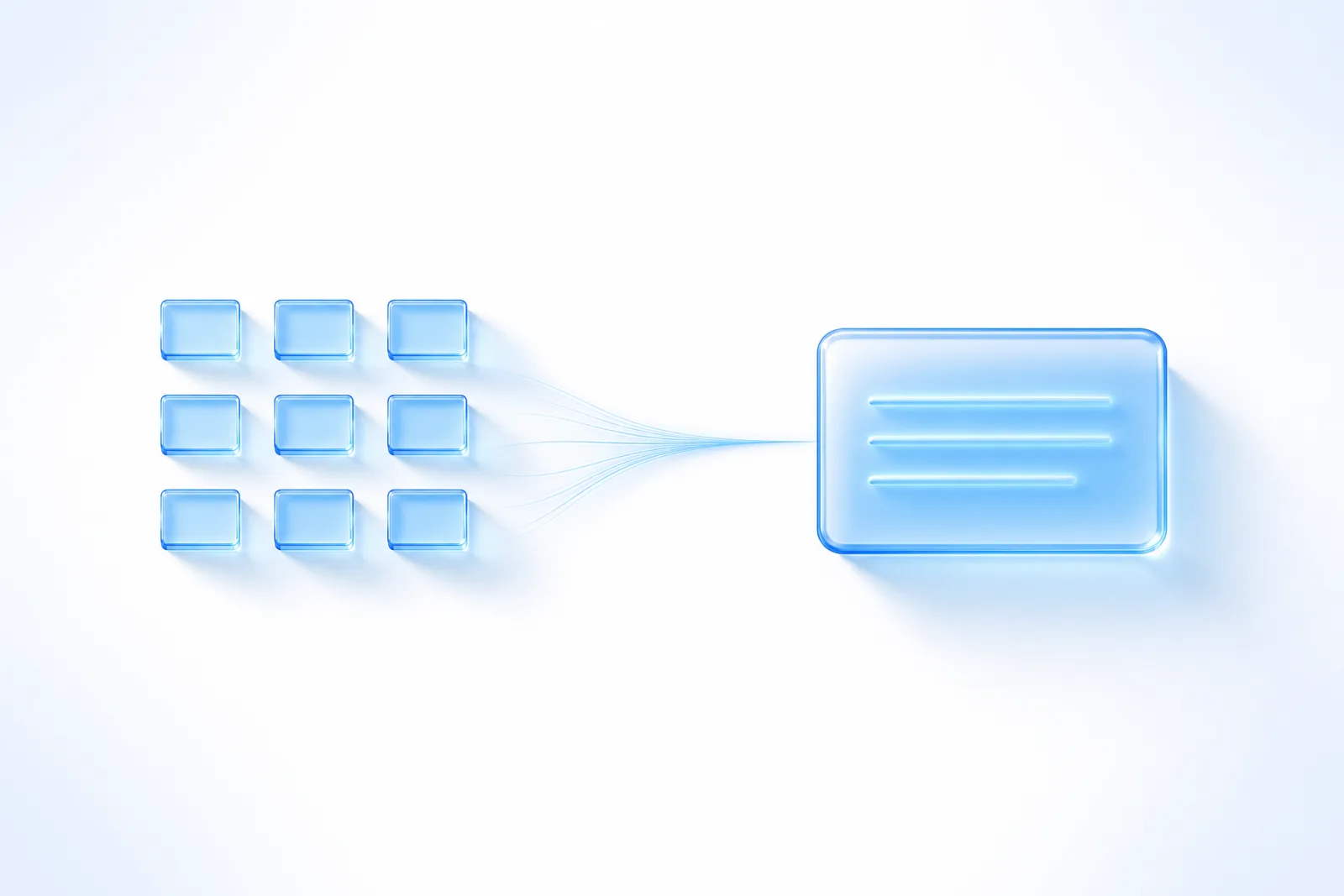
A keyword matches a string: the user has to type words that match your term, by exact, phrase, or broad match. A context hint matches a situation: OpenAI reads the meaning of the whole conversation and scores how relevant your ad is to it. The keyword model asks "did the user say my words?" The context-hint model asks "is this the buyer and moment I described?"
| Dimension | Google Ads keyword | ChatGPT context hint |
|---|---|---|
| What you write | A list of keywords with match types | One to two plain-language sentences |
| What gets matched | The words in the user's query | The meaning of the whole conversation |
| Match logic | Lexical — string overlap by match type | Semantic — relevance scored across the conversation |
| Where it lives | A keyword inside an ad group | A field at the ad-group level |
| Reach per unit | One phrasing per keyword | Many phrasings of one intent, from a single hint |
| What sets your price | Bid and Quality Score | Bid and relevance across hints, landing page, title, and copy |
| Negative targeting | Negative keyword lists | Not yet available — tighten the hint instead |
| Bulk import | Upload thousands of keywords | No keyword import — one hint per ad group |
In short: keywords match strings; context hints match situations. That is why a paid-search account with two thousand keywords often becomes a few dozen context hints — each keyword was a different way of phrasing a handful of underlying buyer moments, and the hint describes the moment once.
From keywords to context hints — a translation table
If you run Google or Microsoft Ads, you already have the instincts; they just map onto new objects. This is the translation most paid-search marketers need:
| Your paid-search habit | The context-hints equivalent |
|---|---|
| Exact, phrase, and broad match types | No match types — one semantic relevance score |
| Single keyword ad groups (SKAGs) | One ad group per audience-and-intent combination |
| Quality Score | Relevance score across hints, landing page, title, and copy |
| Negative keyword lists | No negative hints yet — write a tighter hint, or exclude a custom audience |
| Customer Match lists | Custom audiences — include, exclude, or bid-adjust on your own lists |
| Keyword bulk upload | One to two sentence hints, written per ad group |
| Search terms report | Read the conversation themes that converted |
The structural discipline is the same one that made single-keyword ad groups work: one tight idea per ad group, so the ad and landing page can align to it. The difference is that the "idea" is now an audience-and-intent description, written in our Audience-Intent-Topic framework, not a single string.
A worked example — the same buyer, two ways
Say you sell a simple CRM for early-stage software companies. Here is how the two models target the same buyer.
The keyword list chases dozens of phrasings of one situation and still misses the ones you did not think of. The hint describes the situation once, and the model matches every phrasing of it — including the long, messy, real sentences people actually type into ChatGPT. You can draft one from a URL and a buyer description with our Context Hint Generator.
Operator implication
In the first ChatGPT ad accounts I built after the 2026 test opened, the hardest habit to unlearn was keyword thinking. The marketers who struggled pasted fragments — "best crm, crm software, crm tool" — into the hint and got diffuse, low-relevance delivery. The ones who did well wrote a sentence a salesperson would recognize: a real buyer, in a real moment, with a real reason to click.
The privacy difference advertisers should understand
There is a second, quieter difference. Keyword and cookie targeting are built on data trails about the user. Context matching is built on the meaning of the conversation, and advertisers never see the conversation. OpenAI's help center states it directly:
"Advertisers do not have access to your chats, chat history, memories, or personal details."
For the advertiser, this means you are buying relevance to a described moment, not a profile of a person. You get aggregate performance — impressions, clicks, spend, conversions — not the underlying chats. That is a meaningful shift from the identifier-based targeting paid-search and social marketers are used to, and it is part of why the model can match intent without handing user data to advertisers.
What context hints do not have
Coming from keywords, the missing features matter as much as the new ones:
- No match types. There is no exact, phrase, or broad. There is one semantic relevance score.
- No negative-keyword sheet. You cannot upload a list of terms to exclude. You shape topical exclusion by writing a more precise hint; negative hints are expected later. You can, however, exclude people — custom audiences let you suppress delivery to uploaded customer lists at the campaign level.
- No keyword bulk import. You cannot port a keyword sheet. You group keywords by the buyer moment they represent and write a hint per moment.
- No delivery guarantee. A hint describes where you are relevant; it does not reserve a placement. Delivery depends on an eligible conversation and winning the auction.
Five mistakes that come from keyword brain
- Stuffing the hint with keyword fragments. The system reads meaning, not term counts. A comma-separated keyword pile under-describes intent and dilutes relevance.
- Writing one giant catch-all hint. Mixing several audiences and intents into one ad group is the SKAG mistake in new clothing. One audience-and-intent per ad group.
- Ignoring the other three inputs. Relevance is scored across hints, landing page, title, and copy. A sharp hint pointed at a generic homepage still loses.
- Expecting negatives to save a loose hint. There is no negatives sheet to clean up after the fact. Precision has to live in the hint.
- Treating it as set-and-forget. Read which conversation themes converted and tighten the hint, the way you once read a search terms report.
Once the difference clicks, the writing craft is its own discipline — see how to write context hints that convert, and the definitive guide to context hints for the full operator playbook including the deeper context hints versus Google keywords breakdown.
Done for you: Context Hint Strategy
Writing hints is easy; building targeting you can actually read when the platform reports nothing per hint is not. Our context hint strategy engagement harvests your buyers’ real language and designs the ad-group architecture around it — from $3,999.
Frequently asked questions
What is a context hint in ChatGPT ads?
A context hint is a short, plain-language description, usually one to two sentences, of the conversations and buyer moments where you want your ChatGPT ad to appear. You write it at the ad-group level. OpenAI's ad system reads the live conversation and matches your ad by meaning, not by an exact-match keyword, and a hint does not guarantee delivery in any specific conversation.
How do context hints work in OpenAI Ads?
You write a one to two sentence hint at the ad-group level describing the buyer and the situation. As a user chats, OpenAI interprets the conversation and computes a relevance score across your context hints, landing page, ad title, and ad copy. A relevance-weighted, second-price auction then ranks eligible advertisers, and the winning ad renders below the response, labeled as sponsored.
Can I import my Google Ads keyword list into ChatGPT ads?
No. There is no keyword bulk import. Context hints are written as natural-language descriptions of the buyer and moment, not as match-typed keyword strings. The practical move is to group your keywords by the underlying situation they represent and write one hint per audience-and-intent combination.
Do context hints use exact match or broad match?
Neither. Match types are a keyword concept. Context hints are matched semantically: OpenAI interprets the meaning of the whole conversation and scores relevance, so a single hint can reach people who express the same need in many different ways without you listing each phrasing.
How long should a context hint be?
One to two sentences. A good hint names who the buyer is, what situation they are in, and what they are trying to do. Padding it with keyword fragments weakens it, because the system is reading meaning, not counting term matches.
Do context hints have negative keywords?
Not today. There is no negative-keyword sheet. To exclude unwanted conversations you tighten the hint itself so it describes only the buyer and moment you want. Negative hints are widely expected as a future feature but are not currently available.
Do context hints guarantee my ad shows in a specific conversation?
No. A context hint is not a delivery guarantee. Your ad only appears when an eligible advertiser exists and the conversation crosses a relevance threshold, and then only if you win the relevance-weighted auction. Hints describe where you are relevant; they do not reserve placements.
Where do I add context hints in OpenAI Ads Manager?
At the ad-group level. The object model is campaign, then ad group, then ad. Context hints are an ad-group-level field, which is why the discipline is one ad group per audience-and-intent combination rather than one ad group per keyword.
Why did OpenAI use context hints instead of keywords?
Because people do not type keywords into ChatGPT; they describe a whole situation in natural language. A keyword matches the exact words a user types, which misses the many ways the same need can be phrased. Context hints let the model match the meaning of the conversation, which fits how people actually express intent in chat.
Sources and further reading
- OpenAI Help Center — ChatGPT Ads documentation (ad groups, context, and the basics of how ads are matched and labeled).
- OpenAI — Testing ads in ChatGPT (how ads are matched to the conversation and kept separate from answers).
- OpenAI — Ads Manager Beta (the self-serve platform where context hints are written).
- Aggarwal et al. — GEO: Generative Engine Optimization, KDD 2024 (the research behind why this page cites sources and leads with definitions).
- Context Hints — the definitive guide to context hints and how to write context hints that convert.
Want help translating your account into context hints?
30 minutes with Tarun. Bring your top ad groups or keyword themes and we will map them to context hints, landing pages, and copy that score relevance together.
Book a discovery callTarun Kapoor
Twelve years of media buying across GroupM, WPP, Ogilvy & Mather, and Neil Patel Digital. Has personally owned media for Nestlé, Sage, Qualcomm, Aetna, Weight Watchers, Chubb and Novotel.